
 ×
×
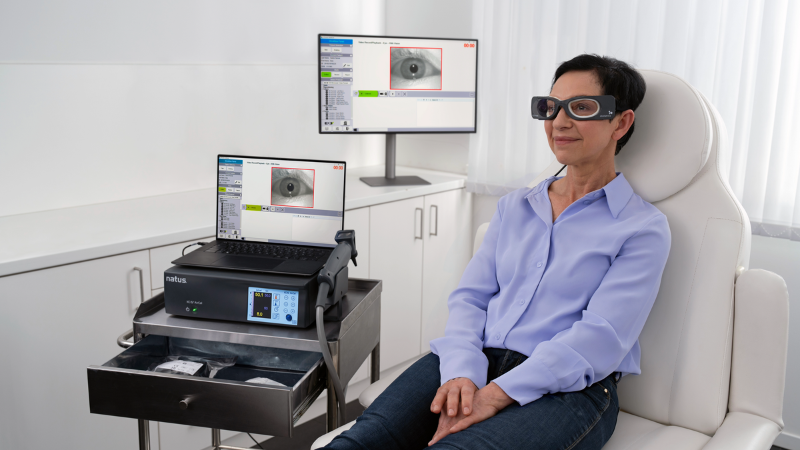
The Short Answer: The video head impulse test, or vHIT, is a quick, non-invasive vestibular assessment that uses lightweight goggles with a high-speed camera to measure how the eyes respond to fast head movements. It evaluates each of the six semicircular canals and helps clinicians identify peripheral vestibular disorders with strong diagnostic accuracy.
For patients reporting dizziness or vertigo, finding the source of the problem starts with measuring how the inner ear responds to motion. The vHIT test gives clinicians a fast, objective look at the vestibulo-ocular reflex across high-frequency head movements that other vestibular tests can’t capture. This guide walks through how video head impulse testing works, what vHIT results mean, and how the test fits alongside caloric testing in broader vestibular assessment.
The vestibulo-ocular reflex (VOR) keeps vision steady when the head moves. When the patient’s head turns, the inner ear sends signals through the vestibular system to the eye muscles, which move the eyes in the opposite direction at the same speed. The result is a stable visual world.
vHIT measures this reflex directly. The patient wears lightweight goggles with a high-speed infrared camera and built-in sensors that track head velocity. While the patient focuses on a fixed target, the clinician delivers small, unpredictable head impulses. The system records eye movement at high frame rates, then compares head velocity to eye velocity to calculate vHIT gain.
VOR gain is the ratio of eye velocity to head velocity during a head impulse. A normal vHIT shows a gain value close to 1.0, meaning the eyes move approximately at the same speed as the head in the opposite direction.
When the VOR is impaired, the eyes can’t keep up with head rotation. The brain compensates by generating a corrective saccade, also called a catch-up saccade, to refocus on the target. Two types matter clinically:
The presence of overt or covert catch-up saccades is a strong indicator of peripheral vestibular dysfunction, even when gain values look borderline.
A vHIT test takes about 10 to 15 minutes. The patient sits upright while the clinician fits the goggles and calibrates the system to a fixed visual target on the wall.
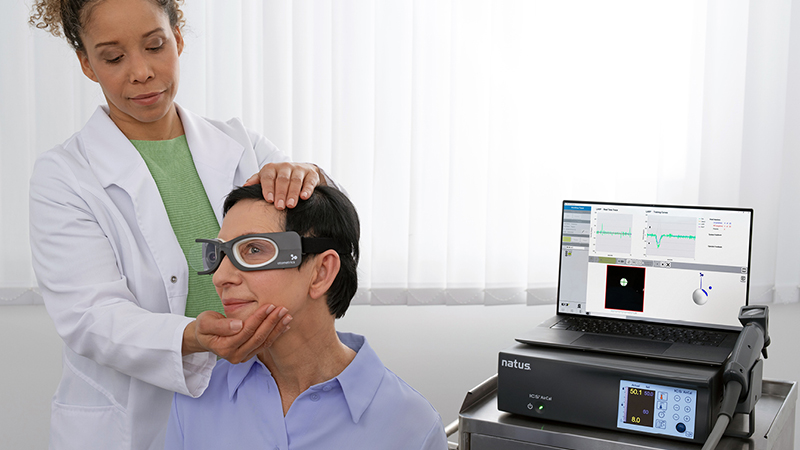
The clinician then stands behind the patient and delivers small, unpredictable head impulses in three planes:
Each head impulse is a brief, fast head rotation. The system records eye and head velocity for each impulse, and vHIT results are displayed immediately on screen.
vHIT and the caloric test both evaluate the vestibular system, but they measure different things. Each captures information the other can’t, which is why many clinics use them together as part of a full vestibular workup.
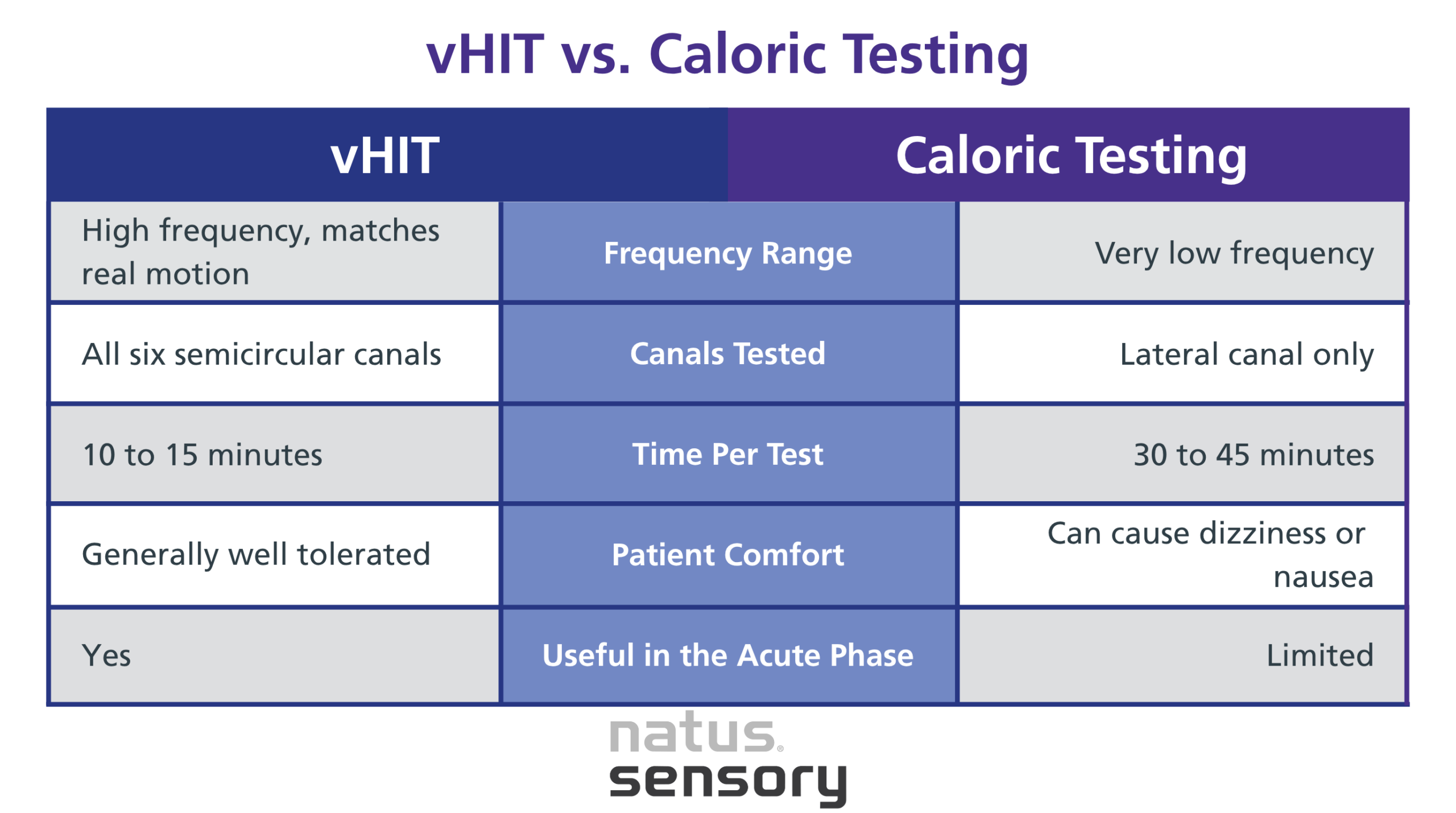
Caloric testing remains the historical gold standard for low-frequency lateral canal assessment. vHIT adds high-frequency data across all six semi-circular canals and is better tolerated by patients in the acute phase of vestibular symptoms. Used together, the two tests give clinicians a fuller picture of vestibular function across the frequency range that matters in real-world head movement.
vHIT is a useful tool for identifying a range of vestibular disorders. Common findings include:
According to a consensus document published in the Journal of Vestibular Research, reduced horizontal VOR gain measured by vHIT is one of the accepted diagnostic criteria for bilateral vestibulopathy and should be interpreted alongside other vestibular function tests when appropriate.
Interpreting vHIT results comes down to three things: gain values, catch-up saccades, and symmetry between sides.
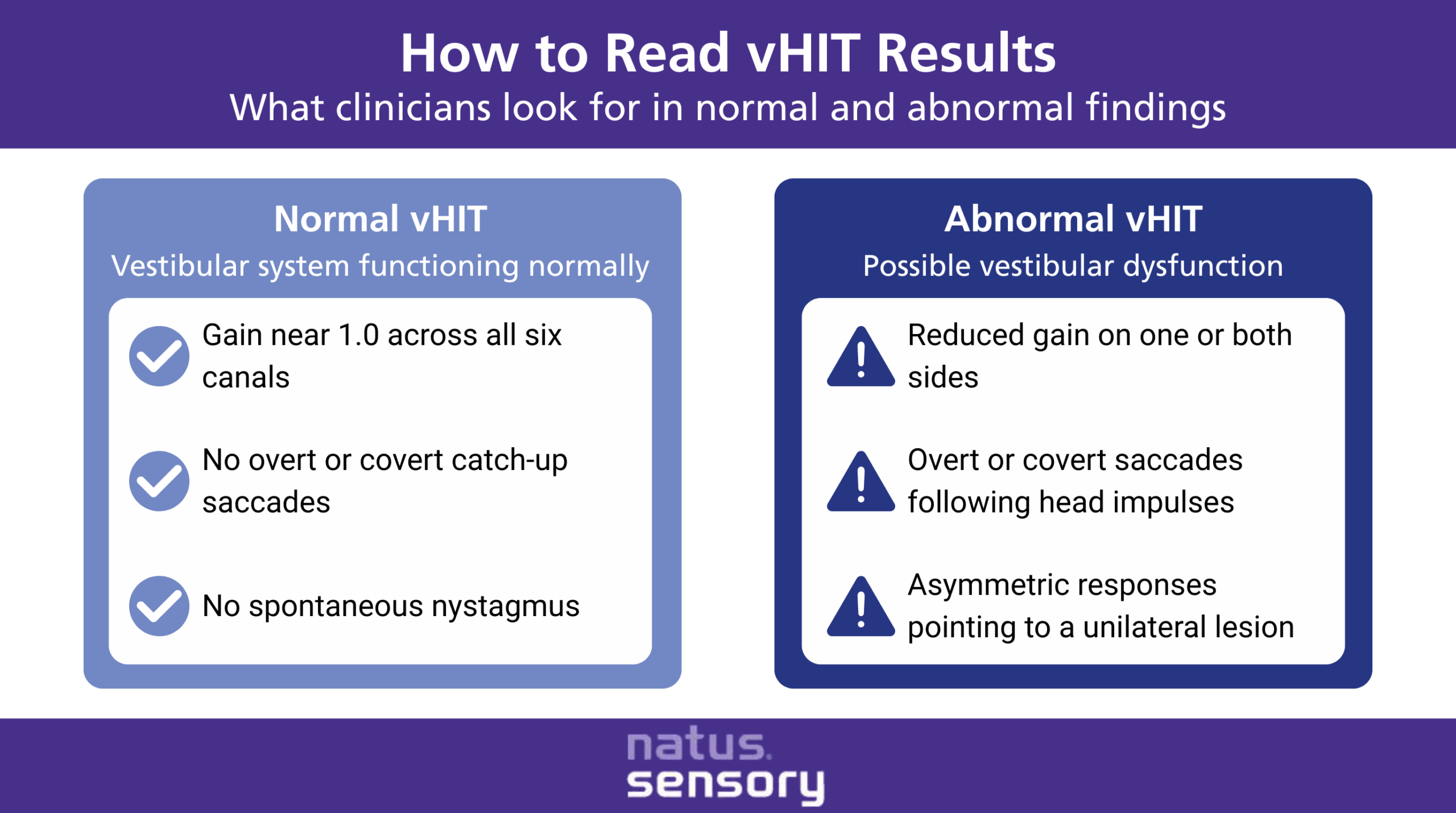
vHIT in the acute phase is particularly useful for diagnosing vestibular neuritis, since the affected side will typically show clear gain reduction and catch-up saccades within hours of symptom onset.
vHIT has earned a place in modern vestibular assessment because of how much information it produces in a short time. Compared to older vestibular tests, vHIT offers:
These advantages make vHIT a practical addition to clinics that already perform VNG, caloric testing, and other forms of vestibular assessment.
Trusted VNG testing solutions from Natus Sensory
vHIT gives clinicians a fast, objective measurement of vestibular function across all six semicircular canals using high-frequency head movements that mirror real-world motion. By tracking VOR gain and catch-up saccades, the test helps identify peripheral vestibular disorders like vestibular neuritis and bilateral vestibulopathy, and supports differentiation between peripheral and central causes of vestibular symptoms.
At Natus Sensory, the ICS® Impulse is a vHIT system validated against the scleral search coil, the historical gold standard for measuring eye movement during head impulse testing. It tests all six semi-circular canals, delivers results immediately, and integrates with the Otosuite Vestibular platform alongside VNG and caloric data for unified reporting.
If you work in audiology, ENT, neurology, or vestibular rehabilitation, contact our team to learn how the ICS® Impulse fits your workflow or explore our full balance assessment portfolio
Sources:
053565 RevA