×
×
Reliable and efficient Auditory Evoked Potentials (AEP) systems for objective hearing assessment across all patient types. Designed to support clinicians make accurate diagnoses with confidence and streamline clinical workflows in audiology and ENT settings.
Products
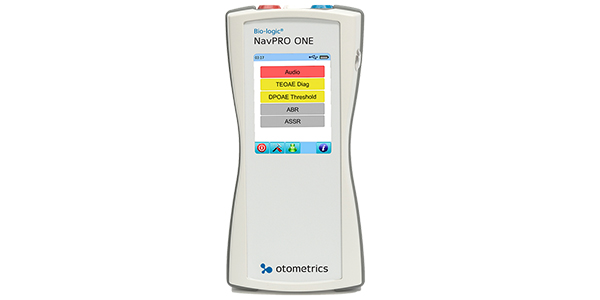
Configurable single-channel AEP device supporting screening and diagnostic ABR, ASSR, EcochG and E-ABR, with an optional VEMP software module.
Auditory evoked potentials (AEP) are small electrical signals the auditory nervous system produces in response to sound. Scalp electrodes record this electrical activity, averaged across many auditory stimuli to lift the response above background noise. Because it does not require a behavioral response, AEP testing supports objective assessment in infants and other difficult-to-test patients. Automated ABR screening and diagnostic ABR use different protocols and workflows.
The auditory brainstem response (ABR) records early neural activity generated by the auditory nerve and brainstem. Related measurements include electrocochleography (EcochG), ASSR for frequency-specific thresholds, and electrical ABR (E-ABR) through a cochlear implant. These methods contribute to threshold estimation, ANSD assessment and evaluation of auditory nerve and brainstem function when interpreted with other clinical findings.
These capabilities support audiologists, ENT specialists, and neonatal care teams in delivering reliable AEP results across a wide range of clinical applications, from diagnostic follow-up after newborn screening to auditory nerve and brainstem assessment.
Frequently Asked Questions
What are auditory evoked potentials?
Auditory evoked potentials are small electrical signals produced by the auditory nerve and brainstem in response to sound. Surface scalp electrodes record this electrical activity, which is then averaged across many auditory stimuli to reveal a clear waveform. Because the test does not rely on a behavioral response, it gives clinicians an objective diagnostic tool for assessing the auditory pathway in infants, children, and adults.
What is the difference between ABR and BAER testing?
They describe the same test. Auditory brainstem response (ABR) and brainstem auditory evoked response (BAER) are two names for the recording of early auditory potentials within roughly the first 10 milliseconds after a stimulus. The BAER/ABR waveform shows a series of positive peaks, with wave V, generally the most robust component, used for threshold estimation.
How do auditory evoked potentials help identify auditory neuropathy spectrum disorder?
In auditory neuropathy spectrum disorder, the cochlea responds to sound, but the signal traveling along the auditory nerve becomes disorganized. ABR testing typically shows an absent or abnormal response, while otoacoustic emissions or the cochlear microphonic remain present. Recording both helps the healthcare provider reach an accurate diagnosis and plan appropriate follow-up.
What is the difference between screening, threshold, and neurodiagnostic AEP testing?
Automated screening ABR should not be confused with diagnostic ABR used for threshold estimation or neurodiagnostic assessment. Threshold estimation uses tone burst, chirp signals or ASSR to assess hearing levels at multi frequencies against system and clinical standards. Neurodiagnostic ABR commonly uses high-level click stimuli and analysis of absolute and interpeak latencies, interaural differences and waveform morphology.
What tests can the Bio-logic NavPRO ONE perform?
The NavPRO ONE can be configured with optional OAE, audiometry modules as well as the VEMP license for both cervical and ocular assessment.
What CPT codes apply to auditory evoked potential testing?
US reimbursement information only; confirm current AMA CPT and payer requirements.
Does Natus Sensory offer service and support for AEP systems?
Yes. Every AEP system is a precision medical device that benefits from regular calibration to produce reliable, accurate results. Natus Sensory provides global service programs, technical support, calibration, and clinical education resources through the Bio-logic brand and the Natus Sensory training academy.
Related Insights - more than 50 years of expert knowledge and experience

Request a quote
Ready to make a difference in patient care?
Learn more about our industry-leading solutions and how we can help advance your care capabilities.
054201 RevA