
 ×
×
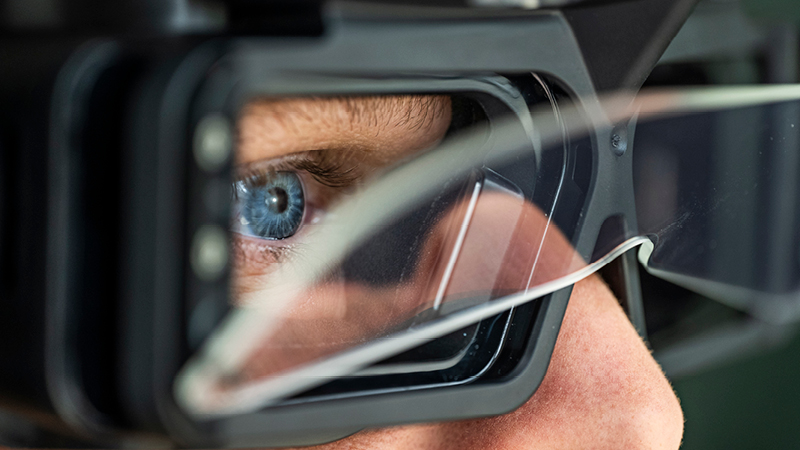
The Short Answer: A videonystagmography test, or VNG test, is a series of diagnostic exams that use infrared cameras inside special goggles to record involuntary eye movements while evaluating the vestibular system. Healthcare providers use it to find the source of dizziness, vertigo, and balance issues by studying how the inner ear and brain communicate during specific tasks and positions.
Dizziness and balance disorders are common across all age groups. An estimated 15-30% of adults experience dizziness or balance-related symptoms at some point in their lives, while vestibular dysfunction affects up to 35% of adults aged 40 years and older. In children, vestibular disorders are estimated to affect approximately 5-15%, depending on the underlying condition and diagnostic criteria. VNG testing gives clinicians a window into vestibular function, helping pinpoint problems that physical exams alone may miss.
The inner ear contains the semicircular canals and other structures that detect head motion. They connect to the brain through the vestibular nerve, which controls the vestibulo-ocular reflex. This reflex keeps vision steady when the head moves. When the balance system works properly, the eyes counter-rotate smoothly. When something is off, eye movements become irregular.
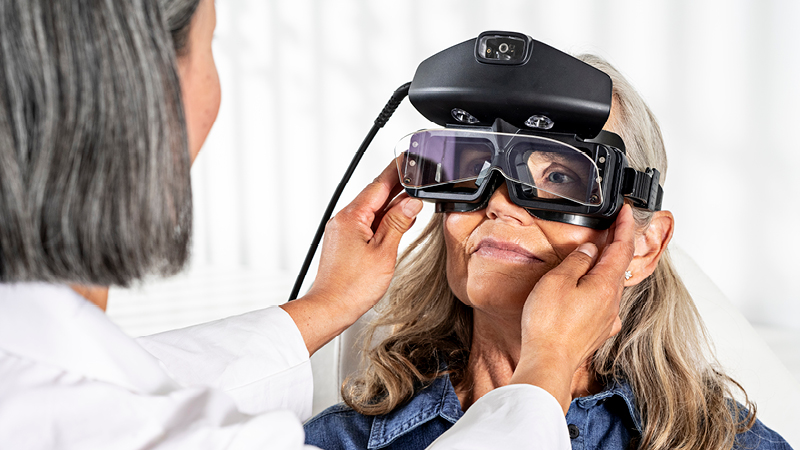
Recording these movements is how clinicians measure vestibular function. Infrared cameras inside special goggles capture small shifts in eye position, giving the healthcare professional a clear record to interpret.
A videonystagmography test usually has three sections, each looking at a different aspect of the balance system.
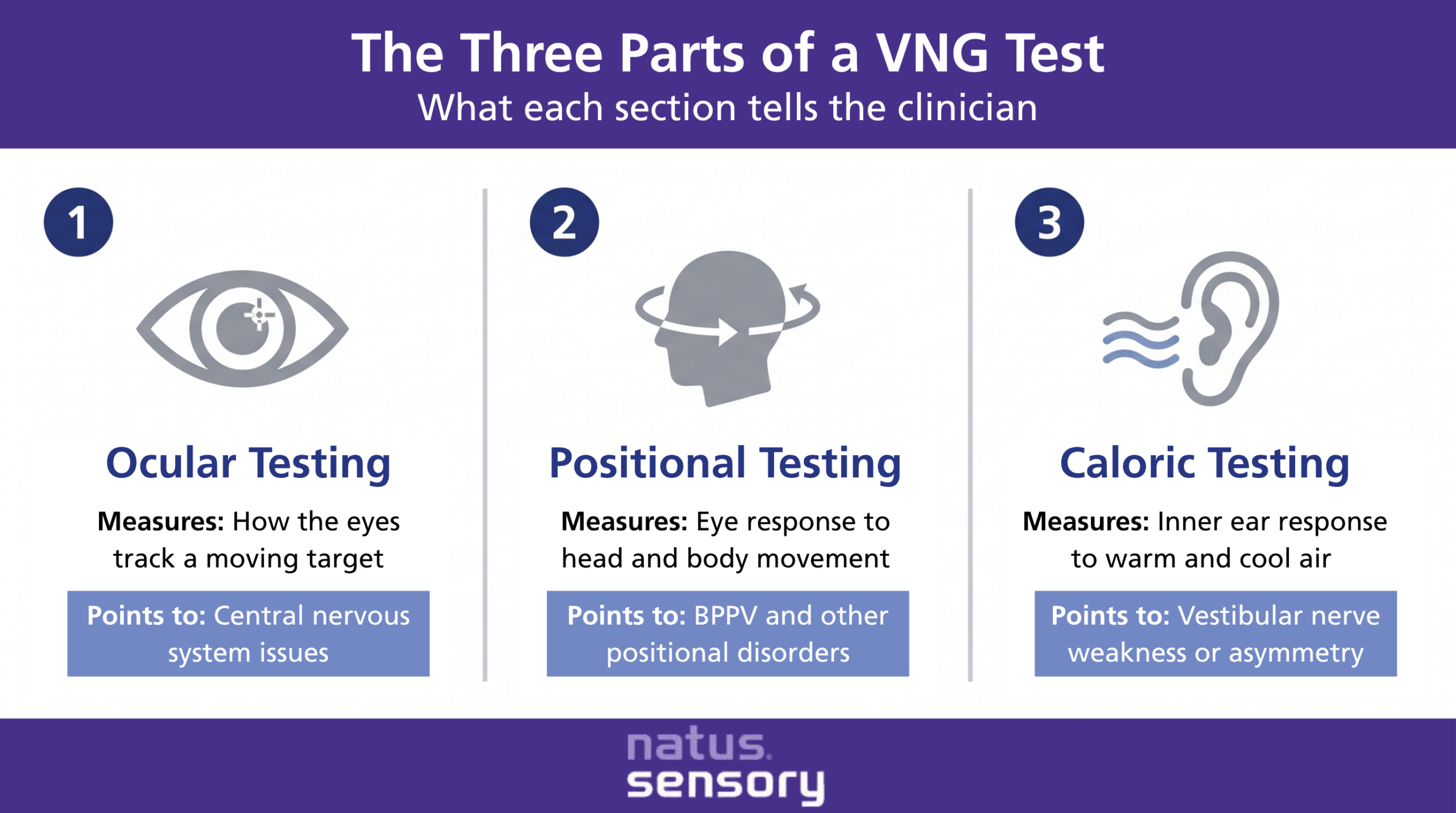
The patient follows a moving visual target with the eyes while sitting still. The cameras record how smoothly the eyes track the target.
This portion checks:
Problems with ocular testing can point to issues beyond the inner ear, including conditions affecting the central nervous system.
The healthcare provider moves the patient’s head and body into various positions while watching for positional nystagmus. The Dix-Hallpike maneuver is one common technique used here.
This section helps identify:
According to clinical practice guidelines from the American Academy of Otolaryngology–Head and Neck Surgery, BPPV is the most common vestibular disorder across the lifespan, with a lifetime prevalence of about 2.4%.
Caloric testing is the part most patients remember. The clinician sends warm air/water, then cool air/water, into each ear canal one at a time. Temperature changes stimulate the vestibular system and produce a measurable eye movement response.
Caloric testing helps:
VNG results give clinicians the data they need to work toward an accurate diagnosis for a range of vestibular conditions:
The test does not always identify a single cause, but it narrows the field substantially. That clarity supports treatment planning, including referrals for vestibular rehabilitation therapy when appropriate.
Preparation matters because outside factors can affect involuntary eye movements and skew test results. Most clinics give patients a list of instructions before the appointment. Common guidelines include:
The healthcare provider should give a clear list of which medications to pause and when. Patients should never stop a prescribed medication without a provider’s guidance.
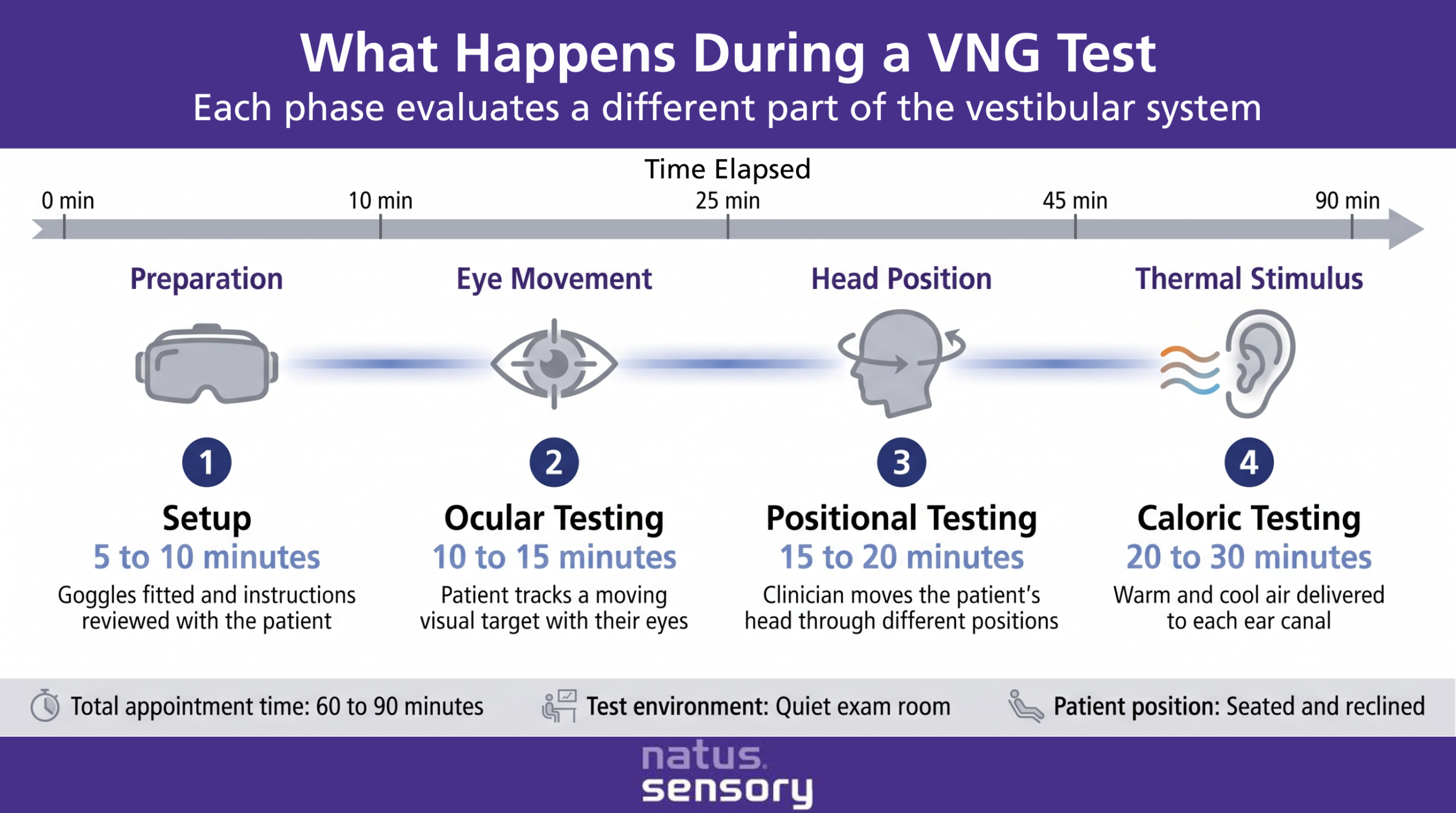
A videonystagmography test takes about 60 to 90 minutes. The patient sits or lies down while wearing special goggles fitted with small infrared cameras. Some parts of the test happen in a dark room so the cameras can record without interference.
After the test, a healthcare professional reviews the recorded eye movements and compares them against expected patterns. Inappropriate eye movements, asymmetric caloric responses, or unusual positional nystagmus all give clues about which part of the vestibular system may be affected.
Possible next steps after reviewing VNG results may include:
Most patients receive results within a few days, often during a follow-up visit where the clinician walks through findings and discusses options.
Dizziness and balance disorder symptoms can come from many sources, including the inner ear, brain, cardiovascular system, or vision. VNG testing helps narrow the focus by giving objective, measurable data on vestibular function and spatial orientation. That clarity helps clinicians avoid trial-and-error approaches and move toward targeted care sooner.
For patients living with chronic vertigo symptoms, an accurate diagnosis is often the first step toward meaningful relief. VNG offers a clinically validated path to that diagnosis when paired with a careful history and physical exam.
Trusted VNG testing solutions from Natus Sensory
The videonystagmography test gives clinicians a reliable way to evaluate the vestibular system and identify the cause of dizziness or balance issues. By combining ocular testing, positional testing, and caloric testing, it produces a clear picture of how the inner ear and brain coordinate to support balance and spatial orientation. The result is data that supports an accurate diagnosis and a more focused plan of care.
At Natus Sensory, the ICS® Dizcovery is built for clinical environments that need accurate, efficient videonystagmography testing. It features plug-and-play goggles, data collection accuracy with the head-mounted laser targets from the goggles, high-frame-rate eye tracking, and modular software that supports a full vestibular workup. Data integrates with the Otosuite Vestibular platform alongside vHIT and caloric results, giving clinicians a unified view of inner ear function in one report.
If you work in audiology, ENT, neurology, or vestibular rehabilitation and want to see how the ICS® Dizcovery fits your diagnostic workflow, contact our team or explore our full balance assessment portfolio.
Sources:
053564 RevA