
 ×
×
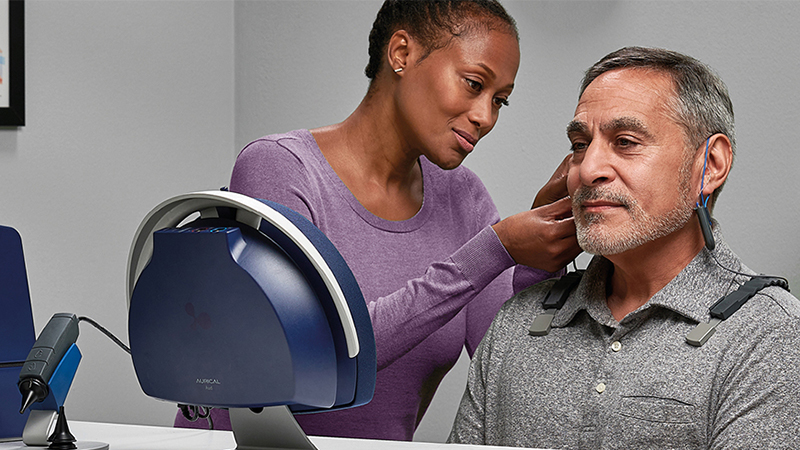
NAL-NL3 Explained: What Clinicians Should Know as It Enters Clinical Conversations
At a Glance: NAL-NL3 is the latest hearing aid fitting prescription from the National Acoustic Laboratories, built on millions of real-world fittings and designed around a modular system that can be tailored to individual listening needs. It replaces the “one prescription fits all” model of NAL-NL2 with a more flexible, evidence-based software framework that better serves the full range of individuals seeking hearing care.
After 15 years with NAL-NL2 as the global standard, a new generation of prescriptive fitting has arrived. NAL-NL3 is already entering clinical conversations, and fitting software integration is underway. Here is what every hearing care professional needs to understand before it reaches their workflow.
NAL-NL3 is a prescriptive hearing aid fitting formula developed by the National Acoustic Laboratories (NAL) in Australia. A prescription in audiology is a systematic, evidence-based approach to selecting amplification gain and output based on a person’s audiogram, with the goal of optimizing both speech intelligibility and listening comfort across different environments.
NAL has been developing fitting prescriptions since the 1970s. The lineage looks like this:
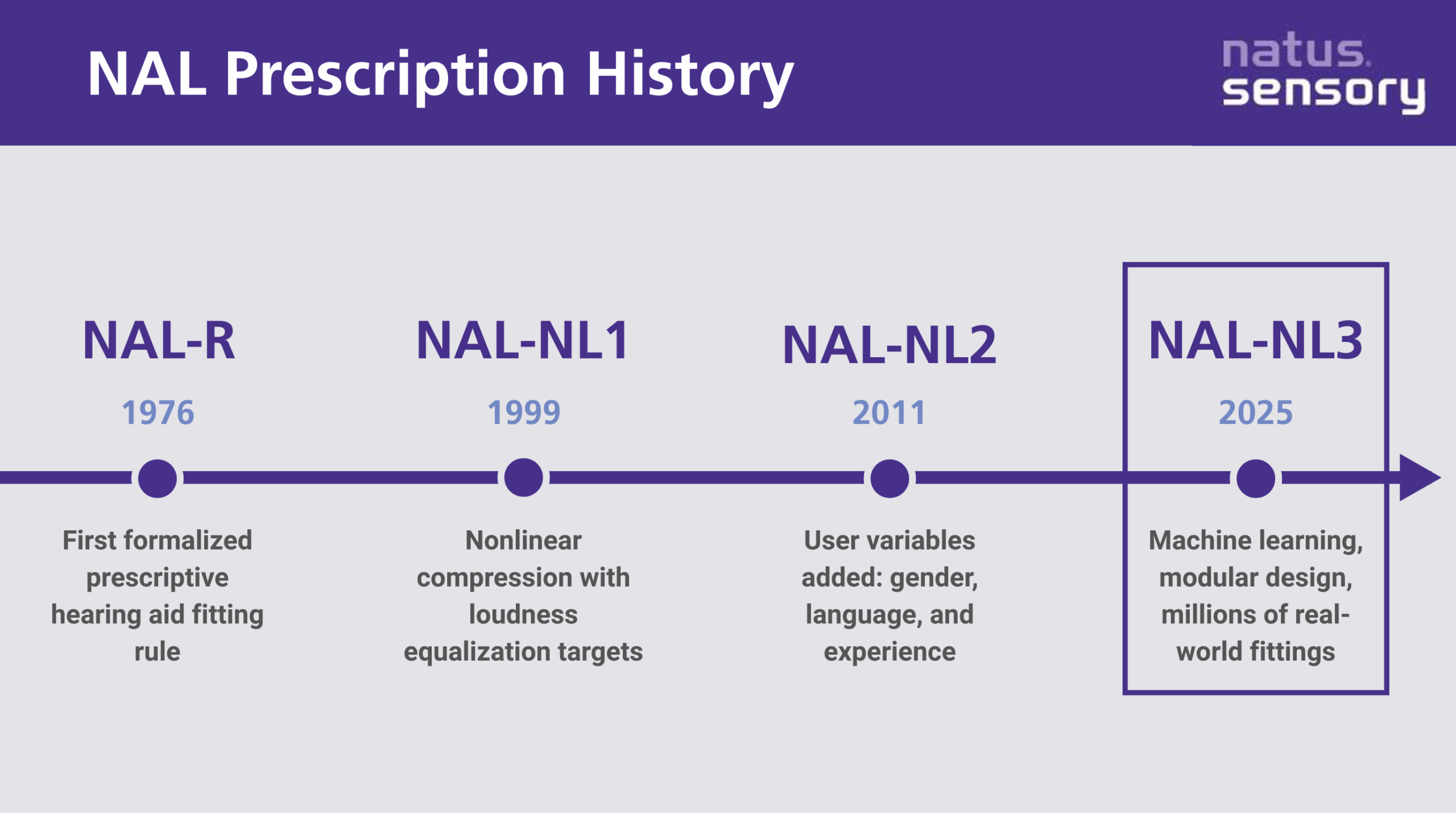
NAL-NL2 is currently the most widely used hearing aid fitting prescription worldwide. NAL-NL3 is its direct successor and is being integrated into fitting software by major manufacturers beginning in early 2026.
A Larger, More Precise Data Foundation
Earlier prescriptions were developed from clinical research involving hundreds or thousands of individuals. NAL-NL3 is based on a significantly expanded dataset of real-world hearing aid fittings, allowing for more refined and individualized prescriptive targets.
The updated core prescription also addresses areas where NL2 had known limitations, including reverse slope hearing loss and mixed hearing loss configurations.
A Shift to a Modular System
This is the most significant structural change. NAL-NL2 applied a single prescription to nearly all patients. NAL-NL3 introduces a modular system: a core prescription paired with targeted modules for specific clinical populations and individual listening needs.
Two patients with similar audiograms can have vastly different hearing difficulties in real-world settings. The modular approach accounts for that range in a way a single formula cannot. As The Hearing Review notes, NAL-NL3 marks a pivotal shift from single-formula fitting to a responsive, evidence-based system that retains clinical rigor while giving clinicians tools to adapt fittings to real-life needs.
At launch, NAL-NL3 includes two modules alongside its core prescription. Additional modules are planned as the software framework evolves.
The Minimal Hearing Loss Module
This module addresses one of the longest-standing gaps in hearing care. It is designed for individuals who show minimal hearing loss or even a near-normal audiogram but report significant hearing difficulty, particularly in background noise.
Estimates from NAL suggest that up to 30% of new patients presenting at audiology clinics fall into this category. These individuals are typically told their hearing test results are within normal range and are not considered candidates for a hearing aid, so they leave without a solution. The minimal hearing loss module gives hearing care providers a clinical pathway to help this population, fitted as a separate program within a new hearing aid.
The Noise Module
The noise module is designed for patients with documented hearing loss who continue to struggle in background noise environments even with standard amplification. It focuses on improving listening comfort and speech understanding when competing sound is present, addressing one of the most common reasons patients reduce hearing aid use.
Both modules can be integrated as separate programs within a hearing aid rather than replacing the main prescription. Clinicians retain precise control over when and how each is applied.
Real-Ear Measurement and NAL-NL3
Real-ear measurement (REM) remains a cornerstone of accurate hearing aid fittings, and NAL-NL3 is built with that in mind. REM verifies that what a hearing aid delivers in the ear canal actually matches the prescription targets. Without it, prescribed targets remain estimates only.
As NAL-NL3 fitting software rolls out, the same REM principles used to verify NL2 targets apply. Some platforms are introducing enhanced AutoREM features to align real-ear measurement with NL3 targets more efficiently. Clinicians should check with their equipment provider for updated guidance specific to their fitting software.
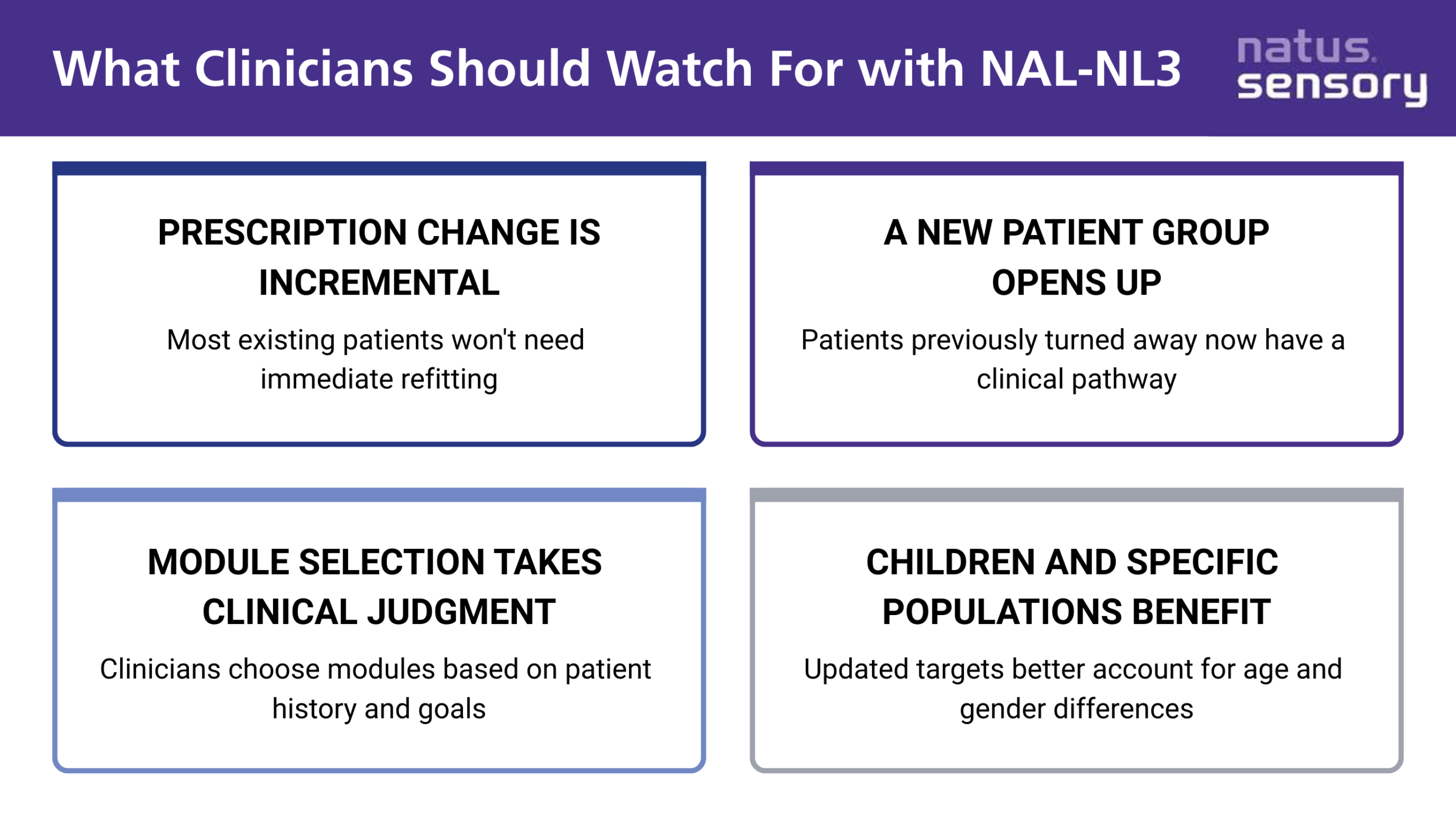
As NAL-NL3 enters clinical use, here are the practical points most relevant to daily practice:
NAL-NL3 is being integrated into clinician-facing fitting software by hearing aid manufacturers. As of early 2026, the first fitting software to include NAL-NL3 has launched globally, with broader availability expected as more manufacturers complete integration.
From a practical standpoint, clinicians can expect:
No significant equipment changes are expected for most practices. The software framework is designed to work with existing clinical hardware.
Transitioning from NAL-NL2 to NAL-NL3 will happen gradually as software updates roll out. A reasonable approach:

What NAL-NL3 Means for Your Clinical Practice
NAL-NL3 is a meaningful advance in prescriptive hearing aid fitting, and it is arriving in clinical settings now. Built on millions of real-world hearing aid fittings and structured as a modular system, it gives hearing care professionals more precise tools and a broader clinical reach than NAL-NL2 offered.
The minimal hearing loss module alone changes the conversation for a significant portion of patients currently leaving clinics without a solution. For clinicians focused on speech understanding, fitting accuracy, and individual listening needs, the transition to NL3 is worth preparing for now rather than later.
Natus Sensory supports the full hearing aid fitting workflow, from diagnostic assessment through real-ear verification, with systems designed with clinicians in mind. To learn more about how Natus Sensory’s fitting solutions support evidence-based hearing care, contact our team or explore our hearing aid fitting products.
Sources:
053410 RevA